Electric Car Motors: Horsepower
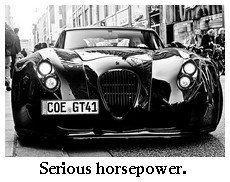
When it comes to electric car motors, the most commonly asked questions start with: "How many horsepower...?"
You know what I mean...
- How many horsepower do I need to get on the freeway?
- How can a 20 hp electric motor do that, when my little 4-cylinder Corolla has a 120 hp engine, and barely gets up the hills?
- How many horses do I need per pound of car?
- Why does the same electric car motor have different horsepower in different conversions? I don't get that.
- What's the deal on "continuous horsepower" and "peak horsepower" ratings?
The Corolla question (why does my Toyota need every single one of its 120 horses to push its light little body around, while a 24hp WarP 9 in the same car would give it twice the pepper?)...well, that's easy. It's just that the answer kind of makes you want to shake your head and blink.
Answer: Efficiency.
Electric Car Horsepower
Electric Car Motor Efficiency
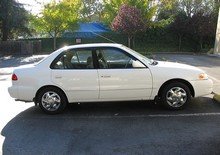
When you hear that electric car motors are more efficient than gas-guzzlers, this is what we're talking about. What we mean is "a LOT more efficient". Most of your Corolla's 120 horses are being used to get from 0-35 mph, which gas engines are not that good at - it takes them a while to find their torque.
Electric car motors (especially series wound DC motors like that NetGain WarP 9), on the other hand, have a particular talent for low-end acceleration, which is just one of the many reasons we love them!
The new version of Build Your Own Electric Vehicle by Seth Leitman - recommended reading! - has some really good answers to the horsepower question. Here's the gist:
- Weight to power ratio:
When you're selecting electric car motors, figure 6-8hp (continuous) for every thousand pounds of finished, loaded vehicle weight. That means figure in the car's curb weight - along with the load of batteries, corn-fed American passengers, and the trunk full of camping equipment. Seth sez: "More horsepower is required for higher speeds, heavier vehicles, and steeper terrains." - Electric Motor Rating:
They're rated at their maximum efficiency, which is designated "continuous", although they are capable of short bursts of power 2-4 times greater than their continuous rating (without damaging the motor), called "peak". - Voltage and Horsepower:
The horsepower goes up with the voltage. Motors are rated, not only "continuous" and "peak", but at a given voltage, as well. There's no way to figure an EV motor's horsepower without knowing the voltage of the system.
No worries if you get a motor that's a little oversized for your car, that's what the controller is for. The tradeoff is that you're wasting weight on motor that you could be spending on batteries. If you get a motor that's a little undersized, though, the challenge is keeping it cool enough.
If you like to drive on the freeway, you'll need more horsepower per pound. Seth says it takes four times the horsepower to go 70mph than it does to go 35mph.
Translating "gas-guzzler engine horsepower" to "electric car motor horsepower" feels a little like translating English to Japanese - not a lot of words in common! Once again, it's - mostly! - all about the voltage.

|

|
Recent Articles


-
Electric Car Conversion Using E-Golf Power Train
Mar 06, 20 05:30 PM
 I own a '19 VW E-golf and would love to transplant the electric powertrain into an old beetle or possibly a Thing (if I can find one cheap enough). Would
 -
𝐓𝐰𝐨 S𝐢𝐠𝐧𝐢𝐟𝐢𝐜𝐚𝐧𝐭 𝐕𝐞𝐡𝐢𝐜𝐥𝐞𝐬 L𝐞𝐚𝐯𝐢𝐧𝐠 𝐭𝐡𝐞 𝐑𝐨𝐮𝐭𝐞 𝟔𝟔 𝐄𝐥𝐞𝐜𝐭𝐫𝐢𝐜 𝐕𝐞𝐡𝐢𝐜𝐥𝐞 𝐌𝐮𝐬𝐞𝐮𝐦
Nov 11, 19 09:51 PM
On this upcoming Saturday, November 9th, a transport truck and trailer will roll into Kingman, Arizona from Los Angeles, California to pickup our very rare circa 1959-1960 Henney Kilowatt with only 40… -
Electric Car Facts and FAQ
Nov 07, 19 04:21 PM
 Electric car facts and frequently asked questions from the e-mail bag. There's no such thing as a dumb question!