Winterize your Electric Car
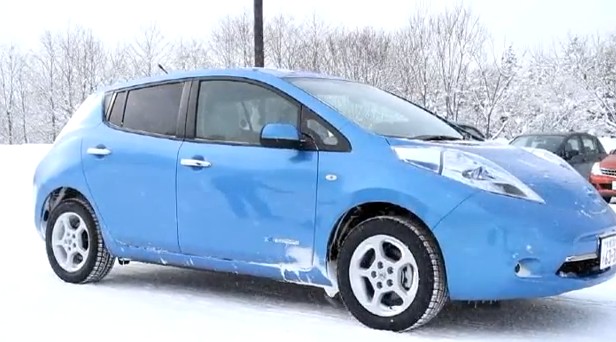
What does it take to winterize your electric car, and keep it running well (and far) in the cold? Your gas-guzzler's battery might be dead when you wake up on a snowy morning, so how much worse might it be for a car that runs on nothing BUT batteries??
I thought I'd ask one of those happy folks in Canada standing hip-deep in snow next to their electric pickups if they've got tips for the rest of us. I figured if you can dress your EV for an Ontario winter...
...there's pretty much nothing my Pacific Northwest sky could dish out that it couldn't handle!
Here are the tricks to winter-proofing your EV, with help from Richard Lane from REV Consulting Limited, a conversion shop and EV consulting service in Ontario.
EV testing in the Canadian winter: the video
Winterize your EV Batteries
If you are a DIYer you already know...
Your batteries are the biggest and most obvious source of EV suffering when the weather turns cold. Your first clue that you've got a problem? The range, ordinarily 30-35 miles, drops off to 5-10 miles!
Why?
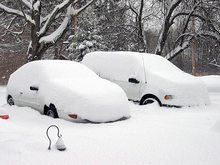
Cold slows down the chemical process that goes on inside the battery, so that your batteries don't take a charge like they do in warmer weather, and they don't give out power like they did in the summer, either.
A car with a large battery bank is less vulnerable to cold than a small NEV. You're more likely to be suffering from cold batteries in your Zenn than in your S-10 conversion, because that big wad of batteries huddled together for warmth behind the cab of your S-10 does a lot better job at retaining its heat through the winter than your little Zenn, which splits its battery bank fore and aft under the floor (surface area to volume ratio, if you speak geek). Got a Leaf or a Tesla? They've already figured this out for you. Stay plugged in, garage if you can. Boom.
Do you have to worry about batteries actually freezing overnight? Usually, no. Lead acid batteries won't exactly freeze until they get very cold (-40F) because of all the stuff in the battery water. If it gets that cold where you live, you'll have to do something to help them. However, at freezing temperature (Zero C), you've lost 40% of your batteries capacity. Lithium? Less of an issue, but if you live at the North Pole (looking at you, Santa) and have LiFePO4 in your sleigh conversion - it might be a good idea to charge in the old reindeer barn.
Recommendations for winter-proofing your EV battery pack

Keeping the car moving during the winter, keeping the batteries charging and discharging, keeping the motor running, keeping the cabin heater heating...all these things contribute to keeping your batteries warm.
Charging warms up your batteries. Most of the time, with large battery banks well insulated and garaged, this is enough, because it does generate a good amount of heat! The trick is to not let the heat out, which leads to the next point...
Cheap, easy-to-find styrofoam insulation (try the home improvement store) works just fine! Alternatively, there's that fluffy fiberglass batting you can use as a battery-blankie. I've heard of people using spray foam, and even (I thought this was cute) packing peanuts.
EV Battery Insulation: What You're Looking For
- Not flammable,
- Doesn't give off toxic fumes if it gets acid spilled on it,
- Flexible enough to fit in the spaces, and
- High R value (measurement of how well it holds in heat).
- Note: Don't neglect the ventilation. It's easy to tuck the batteries in so snugly that there's no place for the charging gases to go. Don't forget to leave them an exit!
Some people use electric blankets to keep their batteries warm, others use heating pads or heat tape under the insulation. Generally, these are "plug in to the wall" arrangements, used overnight when the car isn't running; however, these come in 12-volt versions, too (check the marine supply shops) that you can run off your batteries using your DC/DC converter.
Not everyone has access to this, of course, but it helps a lot to keep your EV in a nice, insulated garage overnight.
One more thing about those expensive EV batteries: You don't want to overdo the heating thing. It reduces your range to let your batteries get chilly, but that doesn't hurt them (up to a point). It's just annoying. But even a little excessive heat? That'll reduce their cycle lives, and you'll wind up replacing them ahead of schedule.
What about the non-battery EV components?
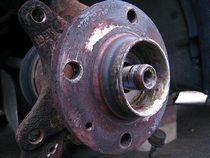
Richard Lane from REV Consulting Ltd., an electric car consulting company in Ontario, says that in addition to keeping your batteries sufficiently warm, vehicle efficiency is an important consideration. Lubricating your transmission and your wheel bearings with a winter-appropriate synthetic helps keep things moving in the cold, which means more battery power. The inflation of your tires makes a difference, too, and changes summer to winter.
Makes sense, right? Like pancake syrup or olive oil in the fridge. It doesn't like to move when it's cold, kind of sits there in a blob? That actually means it takes a lot more energy to spread it where it needs to go. When you heat it up, it's runnier, and it flows easily. It's easy to forget, but lots of things in your car move freely because of liquid helping it along. In the summer, that liquid is free and loose and it takes little energy to get it flowing. In the winter, that friendly puddle of oil turns into margarine, and it takes half your battery juice just to turn your wheels around. That drains your batteries in a hurry, even if they're well insulated.
Fortunately, they make car lubricants that stay runny even when it's cold.
More of that cool electric Jeep in the snow
And what about winterizing YOU?

Ahh. Remember all that excess engine heat your old ICE machine gave off naturally, just as a byproduct of running? Yeah? Well, forget it. Those days are over now that you've got an electric car. That efficient little motor under the hood won't produce enough excess heat to keep you warm.
So what are your options for keeping yourself warm through the winter in your electric car?
Well, some folks just bundle up - wear a coat, thermals, alpaca wool...whatever it takes to keep alive without spending one drop of battery energy on silly little luxuries like cabin heat. (You know who you are.) One could do that. Or...
...the rest of us will be installing a small ceramic heater to keep the chill off the cabin, either powered by your main battery pack using a DC/DC converter (something like your gas-gobbler's alternator), or powered by a completely separate auxiliary battery. Those little electric heaters do a pretty good job, so you won't even miss all that heat-waste from your old ICE car. (...much. Sigh.)
If you're building a conversion and you live in a cold climate, the best thing to do is build it cold-proof from the ground up; it's much easier to do that than to try to retrofit later on.
Me?
Oh, I'll be in my LEAF with the climate control, you know, controlling. Range be damned.
Just can't get enough of that Electric Jeep...
Need some more help with cold-proofing your electric car?
REV Consulting Ltd. is a conversion shop in Ontario that works with EV owners to winter-proof their rides, and they do consulting on home conversion projects, too. If your other car is a dogsled, REV can help you keep your EV happy and healthy through the winter.
Many thanks to:
REV Consulting Ltd.'s owner Richard Lane for a wealth of information (if I messed it up, it's not his fault, though; )
and to the EV Discussion List, especially this thread on insulating your battery boxes, and this one, also having to do with how to winterize your EV.

|

|
Recent Articles


-
Electric Car Conversion Using E-Golf Power Train
Mar 06, 20 05:30 PM
 I own a '19 VW E-golf and would love to transplant the electric powertrain into an old beetle or possibly a Thing (if I can find one cheap enough). Would
 -
𝐓𝐰𝐨 S𝐢𝐠𝐧𝐢𝐟𝐢𝐜𝐚𝐧𝐭 𝐕𝐞𝐡𝐢𝐜𝐥𝐞𝐬 L𝐞𝐚𝐯𝐢𝐧𝐠 𝐭𝐡𝐞 𝐑𝐨𝐮𝐭𝐞 𝟔𝟔 𝐄𝐥𝐞𝐜𝐭𝐫𝐢𝐜 𝐕𝐞𝐡𝐢𝐜𝐥𝐞 𝐌𝐮𝐬𝐞𝐮𝐦
Nov 11, 19 09:51 PM
On this upcoming Saturday, November 9th, a transport truck and trailer will roll into Kingman, Arizona from Los Angeles, California to pickup our very rare circa 1959-1960 Henney Kilowatt with only 40… -
Electric Car Facts and FAQ
Nov 07, 19 04:21 PM
 Electric car facts and frequently asked questions from the e-mail bag. There's no such thing as a dumb question!