Build Your Own Electric Car
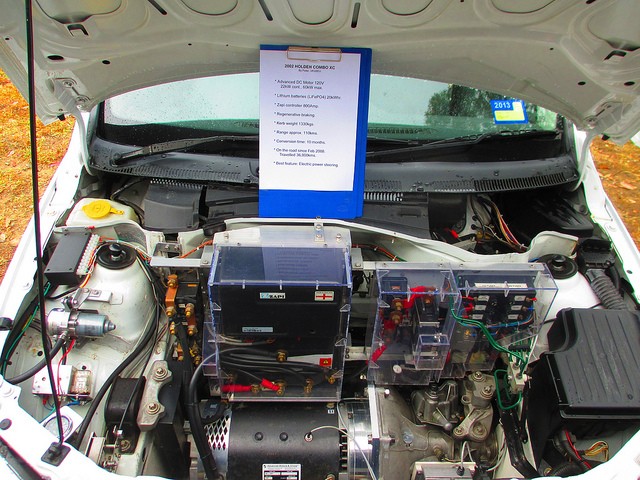
You can build your own electric car, if you can manage to change your own oil and wiper blades. It takes a little know-how, but it's not rocket science. Here are the steps:
- Read everything you can find on the subject when you build your own electric car;
- Find somebody who's already done it to look over your shoulder. Join the local Electric Auto Association and find yourself a mentor!
- Get yourself a donor vehicle (that's the gas-guzzler whose guts you'll be ripping out) that has the nice qualities of:
- Being fairly lightweight. Reverend Gadget at Left Coast Electric swears he can convert everything from a Hummer to a snowmobile, but then, he's the good Reverend Gadget, who's been converting gas vehicles to electric since Ben Franklin first got the dotty notion to fly his kite in a thunderstorm. You'll get most bang for your battery buck if you think "light and aerodynamic".
- Possessing a manual transmission. This is first of all because a transmission is just not all that necessary with electric car motors; they won't stall if you start them in the highest gear, and they just don't operate the same way as that petrol-puffer does: they use a controller (DC motors) or an inverter (AC motors) to tell your electric motor to go backward/forward slower/faster instead. An automatic transmission just takes a big chunk of the available motor horsepower and just TOSSES it right out the door...and who needs that? Also, the donor with a stick-shift may well be CHEAPER. That's just about NEVER a bad thing; )
- Not a rust-bucket. You're going to go to a certain amount of trouble and expense when you build your own electric car... so why put new guts into a rotting hulk?
- Having lots of room for batteries somewhere -- preferably NOT in the passenger compartment. You're going to want to be able to get to them fairly easily for maintenance or whatever, and you're going to want to be able to pin them down somewhere solidly, and you're going to want to distribute their weight fairly evenly. A pick-up bed is pretty darned handy for all this. and finally,
- Not being so exotic that you'll never find replacement brakes except on Ebay. My uncle Chuck converted one of the first Subaru trucks (I didn't even know Subaru made trucks, did you?) to electric - picked it up for a song without a working engine. Great donor, right? (Seemed like it, but no.)
The parts are practically impossible to get, and of course they won't be interchangeable with any other parts, like Toyota or whatever. Right?
So the brakes went out eventually, as brakes will, and to replace them would cost more than the car did...
...so he went out and got a Zap Xebra pickup instead. (Notice the carbon-based fuels are in the BACK?)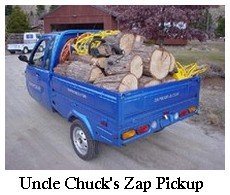
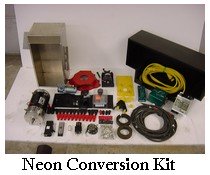
- When you build your own electric car, it's a good idea to get yourself a conversion KIT.
- Because the components are already best for electric cars (Uncle Chuck used, I think, some airplane motor or other. Boeing Surplus comes to mind.)
- the system's already been road-tested, it works;
- all the component parts are already designed to work together;
- it's already put together by people who know what they're doing;
- it already fits the dimensions of your car. You can tell them what you're converting and they'll sell you the appropriate kit;
- the costs are reasonable - they won't charge you an arm and a leg for a conversion kit.
- Cultivate a relationship with a machinist when you build your own electric car. Unless you ARE a machinist, of course, and have all the large machining tools in your garage, you're going to need one. The transmission adaptor plate and the assembly that fits motor to the transmission requires precise machining or you're going to be very unhappy with your conversion for as long as it lasts.
- Get somebody else to yank out the engine. In every town are businesses that are skilled, experienced, and well-equipped to pull 700 pound engines out of automobiles - called auto repair shops. Let them do it. It costs a few hundred bucks, and it's money well spent.
- Get yourself a place to work when you build your own electric car that's clean, heated, well-lighted, and dry. Then, plan to be there a while. Here's why: while it is fairly straightforward to yank your gas-guzzler's tender bits out and replace with clean, non-greasy electrical things, there are many places for the project to get hung up in the waiting phase. That fancy controller might take a while getting through customs in New York while the bomb-sniffing dogs give it a good going over, for example. (Hey, it happens!)
- Work out a parts delivery schedule. If you know you're going to have to build your own electric car on nights and weekends, don't buy all your conversion parts at once and have them all sitting around waiting for you to pull one thing out, get it cleaned up, get it out the door. This is where an EV mentor really comes in handy, they can help you split up the project into bite-sized chunks. (Note: If you're getting a complete electric car conversion kit, skip this step. It's all delivered at once.)
- Learn online. As you may have already discovered, not everybody on every electric car discussion list knows what they're talking about; ) You can find good information at:
- My website's conversion question and answer section, especially for beginners (or non-engineers);
- The DIY electric car forums;
- The EV Discussion List; and
- The EV Photo Album, where people post pictures of their conversions and links to their blogs.
- Blog. Somebody out there will really appreciate the opportunity to learn from your experience. Especially your mistakes; the best EV blogs are the ones where people are brave enough to admit they messed something up or didn't understand something right. If somebody helped you build your own electric car, your EV blog pays it forward by helping the next guy.
- YouTube. A surprising number of excellent YouTube videos have been made by people converting their cars to electric - you can find them by searching for "electric car conversion" (or similar) on YouTube. Here's an electric Suzuki Samurai series that I particularly like.
Don't bother with the ones that show you how to run your car on water for less than $500, btw...I know, I probably didn't have to say it, but the scam makes me mad.
This is why:
When you choose a conversion kit, the first decision will probably be between an AC or DC motor. Here's a discussion of the pros and cons of AC and DC motors, and why I favor the AC motor for conversions.
Videos: Build Your Own Electric Car
Tom G.'s Neon conversion
Paul Holmes' Electric VW Bug
Amateur effort makes the EV world go 'round! I'm reminded of that old saw about the Ark being built by amateurs and the Titanic being built by professionals; )
Have you been wondering how to winterize your electric car? No problem.

|

|
Recent Articles


-
Electric Car Conversion Using E-Golf Power Train
Mar 06, 20 05:30 PM
 I own a '19 VW E-golf and would love to transplant the electric powertrain into an old beetle or possibly a Thing (if I can find one cheap enough). Would
 -
𝐓𝐰𝐨 S𝐢𝐠𝐧𝐢𝐟𝐢𝐜𝐚𝐧𝐭 𝐕𝐞𝐡𝐢𝐜𝐥𝐞𝐬 L𝐞𝐚𝐯𝐢𝐧𝐠 𝐭𝐡𝐞 𝐑𝐨𝐮𝐭𝐞 𝟔𝟔 𝐄𝐥𝐞𝐜𝐭𝐫𝐢𝐜 𝐕𝐞𝐡𝐢𝐜𝐥𝐞 𝐌𝐮𝐬𝐞𝐮𝐦
Nov 11, 19 09:51 PM
On this upcoming Saturday, November 9th, a transport truck and trailer will roll into Kingman, Arizona from Los Angeles, California to pickup our very rare circa 1959-1960 Henney Kilowatt with only 40… -
Electric Car Facts and FAQ
Nov 07, 19 04:21 PM
 Electric car facts and frequently asked questions from the e-mail bag. There's no such thing as a dumb question!